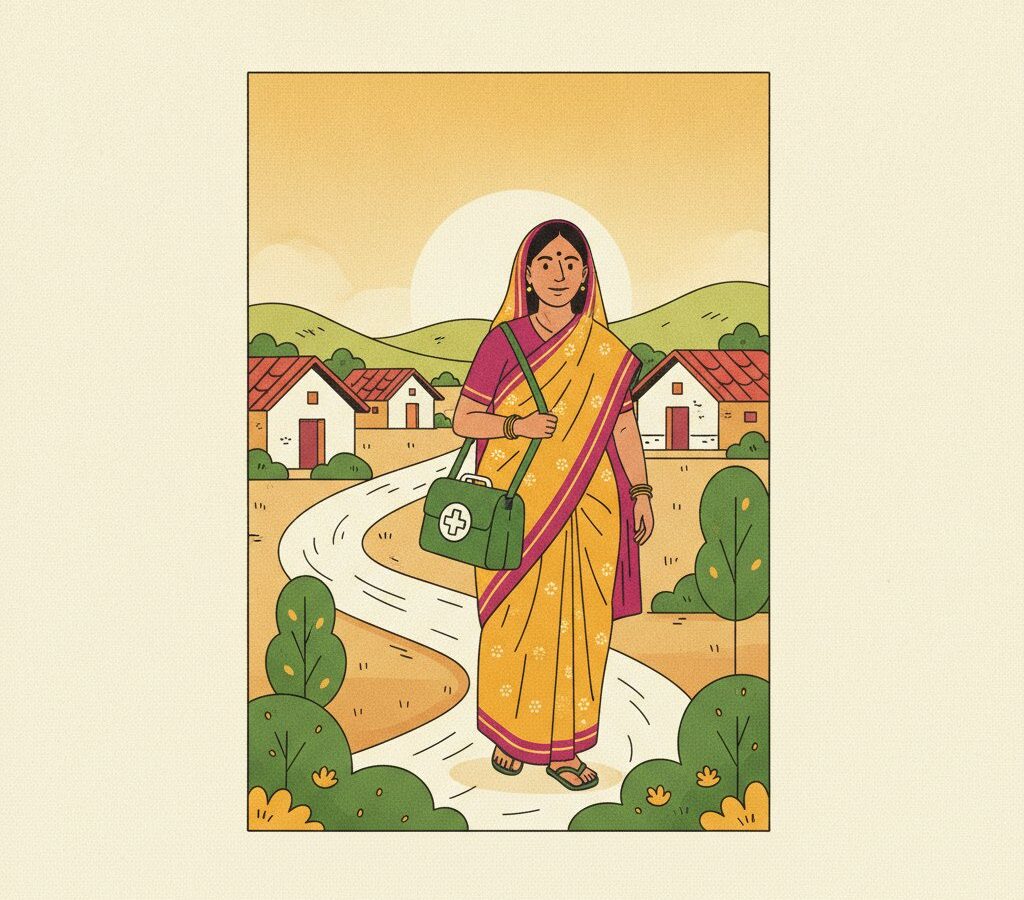
There is a photograph that circulates in public-health circles: an ASHA worker, dressed in a bright sari, knocking on a door in a village where the road ends and the mobile signal fades. In her bag are iron tablets, ORS sachets, a vaccination card, and a notebook. She is, in the most practical sense, the first point of contact between the Indian state and its most remote citizens — and one of the most consequential public-health inventions of the last two decades.
India’s healthcare journey is not a simple triumphant arc. But it contains some of the most remarkable public-health achievements in modern history, and a candid look at both gains and gaps is the only fair way to tell the story.
The Polio Miracle
For decades, paralytic polio cut through children in the subcontinent with devastating regularity. Then, through one of the world’s most complex vaccination drives — door-to-door teams, cold-chain logistics across deserts and flood plains, campaigns timed to festival movements — India was certified polio-free, with no wild poliovirus detected. A country of over a billion people had done what sceptics called impossible. The lesson public-health planners drew was about what community mobilisation, trained local workers, and consistent commitment could achieve at scale. That lesson became the template.
The Universal Immunisation Programme
India runs one of the world’s largest immunisation programmes. The Universal Immunisation Programme covers children and pregnant women nationwide, against diseases including tuberculosis, diphtheria, tetanus, polio, hepatitis B, and measles. The Mission Indradhanush initiative specifically targeted children and women missed in routine rounds — in remote districts, urban slums, and historically underserved communities — by mapping gaps first, then directing intensive rounds precisely where need was highest. Coverage has improved considerably, though public-health experts are clear that full, equitable immunisation remains a work in progress.
The ASHA Worker: Healthcare at the Last Mile
Introduced under the National Rural Health Mission, the Accredited Social Health Activist programme created a cadre of community-based women trained to link households to government health services. Their responsibilities span an extraordinary range:
- Accompanying pregnant women to facilities for institutional deliveries
- Tracking infant immunisation schedules
- Counselling families on nutrition, sanitation, and family planning
- Identifying tuberculosis symptoms and supporting treatment completion
- Serving as a first alert system for disease outbreaks
ASHAs have long advocated for better pay and formal status, and their workloads are substantial — but the evidence that they have improved rural maternal and child health is widely cited.
Ayushman Bharat and the Pharmacy of the World
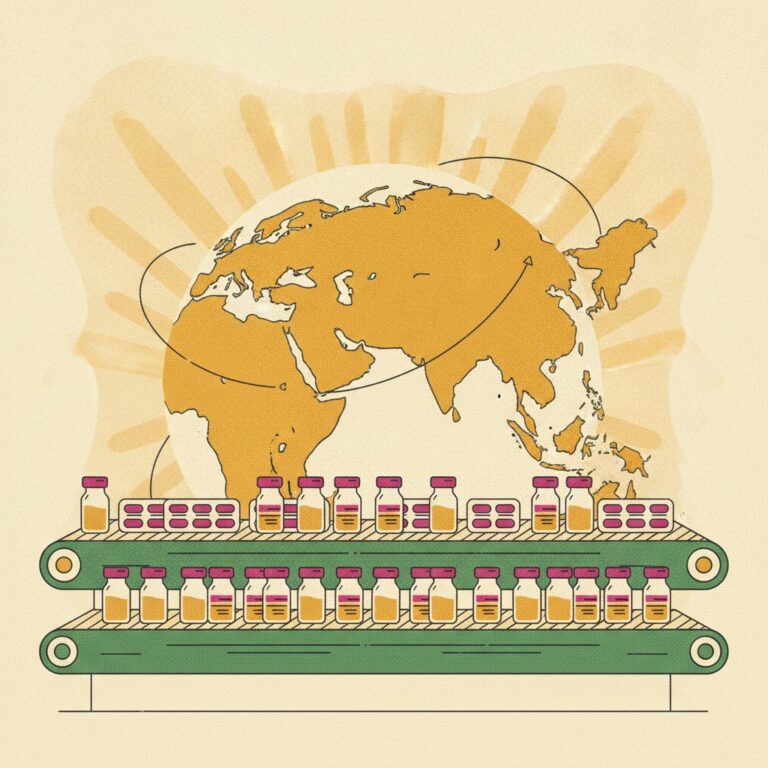
Ayushman Bharat runs as two programmes under one name: a health-insurance scheme offering cashless hospitalisation cover to economically vulnerable families, and a network of Health and Wellness Centres delivering primary care, including management of non-communicable diseases. Beyond its borders, India’s generic-pharmaceutical industry supplies affordable medicines across Africa and Asia, and its vaccine-manufacturing capacity is of global consequence — the phrase “pharmacy of the world” is an accurate description of a structural role.
The Gaps That Remain
Honest reporting demands honesty about what has not been achieved. Rural India faces a significant shortage of qualified doctors. Many government facilities operate below capacity for want of staff, medicines, and equipment. Out-of-pocket health spending remains among the highest in the world as a share of total health expenditure, meaning a serious illness can still be financially catastrophic. Quality of care varies enormously between states and between public and private facilities. The ASHA worker knocking on that door is part of a system still being built — and that is precisely why her work matters. This article is general information, not medical advice.