A Global Moment Rooted in Ancient Soil
Every 21 June, millions of people across more than 180 countries roll out mats, gather in parks, and mark the International Day of Yoga — established by the United Nations in 2014 following a proposal by India. It is perhaps the most visible symbol of how far Indian wellness traditions have travelled from their origins. Yoga studios operate from Buenos Aires to Seoul; Ayurvedic products line health-store shelves worldwide. These traditions are thousands of years old, embedded in Sanskrit texts and lived practice. Understanding what they actually are, and being honest about what we do and do not know about their effects, is a more respectful starting point than either uncritical enthusiasm or reflexive dismissal.
What These Traditions Actually Are
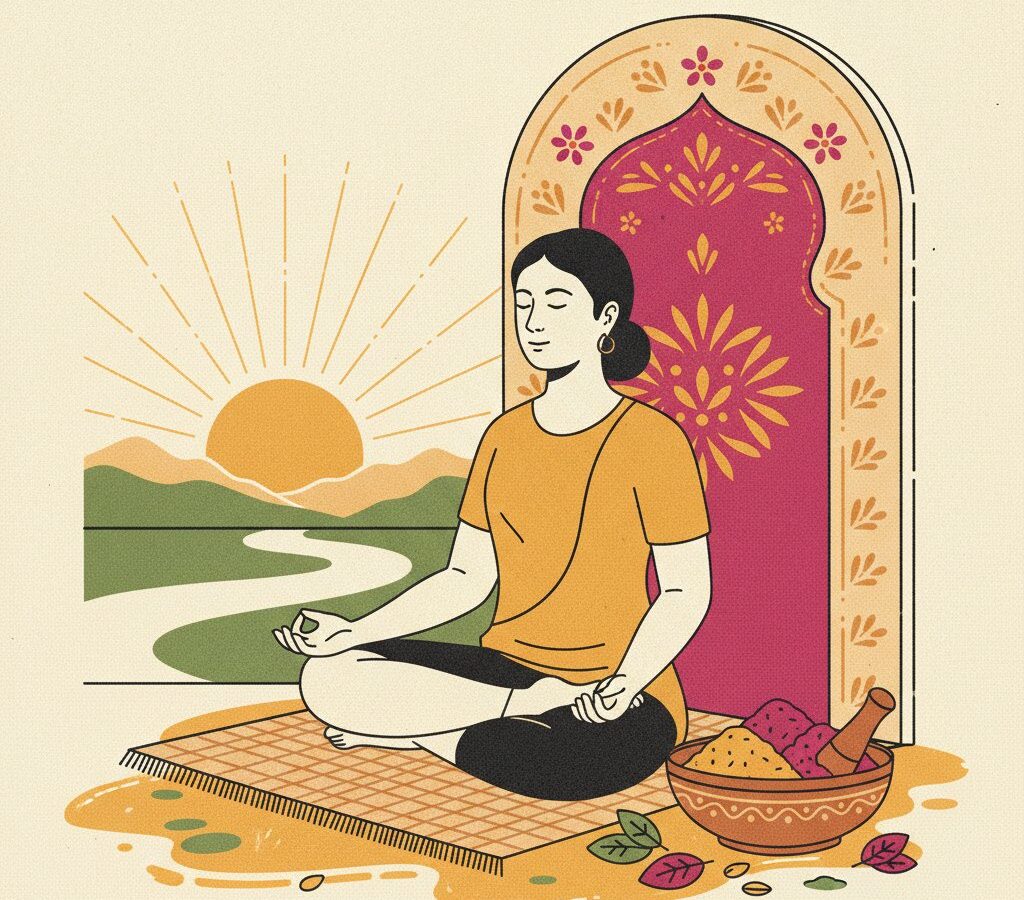
Yoga, in its classical formulation, is far broader than the physical postures most people encounter first. The Yoga Sutras of Patanjali describe an eight-limbed system encompassing ethical disciplines, postures, breath regulation, concentration, and meditation. What is practised globally today is largely a modern form, shaped by twentieth-century Indian teachers who adapted classical techniques for contemporary audiences — not a corruption of the tradition, but a living, evolving practice. Ayurveda — literally the knowledge of life — is one of the world’s oldest documented medical systems, with foundational texts covering diet, herbal medicine, and a theory of health based on the balance of three constitutional principles. India has a Ministry of AYUSH that oversees the regulation and education of these systems; Ayurvedic practitioners complete degree-level programmes.
What the Evidence Shows — and Where It Is Genuinely Uncertain
For yoga, the research base is growing and broadly positive for certain applications. A substantial body of peer-reviewed studies has found associations between regular practice and improvements in flexibility, balance, stress markers, and quality of life for people with certain chronic conditions. The important caveats: many studies are small or methodologically varied, and it is often difficult to isolate which component drives any benefit. Yoga is not a substitute for medical treatment, and the research does not support claims that it cures disease — but it does support the idea that a regular, mindful movement and breathing practice has meaningful wellbeing benefits for many people. For Ayurveda, the picture is more complex. Some botanicals — turmeric, ashwagandha, neem — have attracted serious pharmacological research, while Ayurveda as a complete diagnostic system has not been evaluated through the large-scale randomised trials modern medicine requires. Some classical formulations have raised safety concerns when used without proper guidance. Traditional does not automatically mean safe, and traditional does not automatically mean ineffective. This article is not medical advice; anyone managing a health condition should speak to qualified healthcare professionals.
The Cultural Conversation That Matters
Beyond evidence, there is a legitimate conversation about how Indian traditions are received globally. Yoga’s spread has prompted discussion within India about cultural attribution — whether its Indian roots and spiritual dimensions are acknowledged or flattened into a commercial fitness product. India’s effort to document traditional knowledge in a digital library partly addresses a related concern: preventing the patenting of traditional practices by parties who had no role in developing them. As yoga and Ayurveda travel outward, research tools and clinical frameworks are coming back — potentially helping to study these traditions more rigorously. That two-directional dialogue, conducted with mutual respect and intellectual honesty, is probably the most productive path forward for traditions that deserve neither uncritical promotion nor casual dismissal.