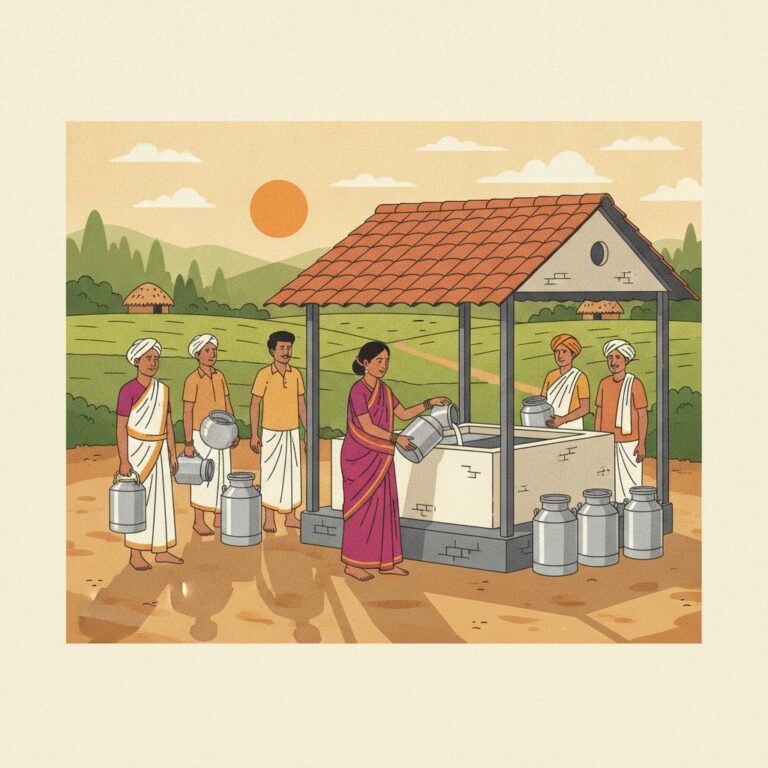
In parts of Rajasthan, Maharashtra, Andhra Pradesh, and Karnataka, the groundwater table was falling year by year through the latter decades of the twentieth century. Bore wells that once struck water at thirty feet needed to go down to three hundred. Rivers that had flowed seasonally ran dry. Then, in scattered clusters across the country, something began to reverse.
What Watershed Development Actually Is
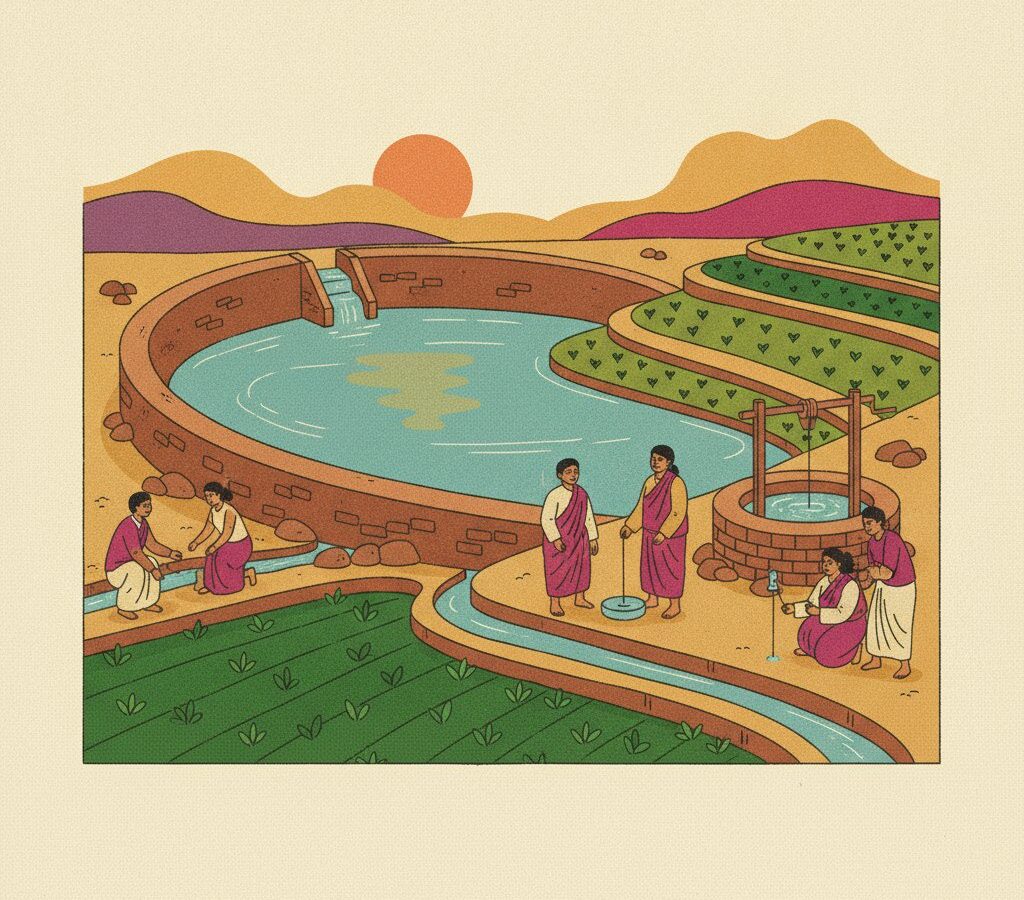
A watershed is simply the land area that drains into a common water body. When rain falls on that land, it either runs off quickly across hard or degraded soil, or it slows down, soaks in, and recharges the groundwater beneath. Watershed development is the practice of engineering that choice. The tools are mostly ancient and low-tech: check dams hold water back long enough for it to sink in; contour bunds stop water from sheeting off a hillside; farm ponds capture rainwater; nala plugs block drainage channels. Collectively, these structures turn a single monsoon into a slow release of moisture that lasts through dry months. What changed from the 1980s onward was the insistence that these structures be planned, built, and maintained by the communities that depend on them.
Places Where It Worked
The village of Ralegan Siddhi in Maharashtra became one of the most cited examples in India’s development literature. Through community labour, social agreements around grazing and tree-felling, and a series of watershed structures, a drought-prone village became food-secure. In Rajasthan, the traditional earthen rainwater-harvesting pond, the johad, had fallen into disrepair; civil society organisations working with villages helped revive hundreds of them, and in several river basins, seasonal rivers that had run dry for decades began flowing again. In Andhra Pradesh and Telangana, government watershed programmes run at scale documented significant increases in agricultural productivity in successful project areas.
Why Community Ownership Is the Variable That Matters
A check dam built by a contractor and handed to a village that had no role in choosing its location tends to silt up within a few years, because nobody feels responsible for it. A check dam that a village planned, contributed labour to, and agreed to manage is repaired after every monsoon, because the people downstream know exactly what it does for their wells. This is not romanticism about rural self-sufficiency; it is a practical observation that infrastructure requires maintenance, maintenance requires motivation, and motivation requires ownership. The most effective programmes treat the village as the planning unit, invest a full year in social preparation before digging, and ensure the most water-vulnerable households have a voice.
The Honest Caveat
Results vary considerably, and it is important to say so plainly. Hydrology is local: a technique that recharged aquifers dramatically in one valley may do little in a neighbouring one. Social cohesion matters enormously — a village with deep land conflicts will struggle to sustain collective maintenance. And where groundwater is being extracted far faster than any surface treatment can recharge it, watershed development can slow the decline but not reverse it without agreements to reduce extraction. None of this negates what the model has achieved. Community-led watershed management, done carefully and with long time horizons, can revive groundwater, stabilise farming, and reduce distress migration. It is not a silver bullet. It is something more durable: a proven method that rewards patience, local knowledge, and genuine community ownership.