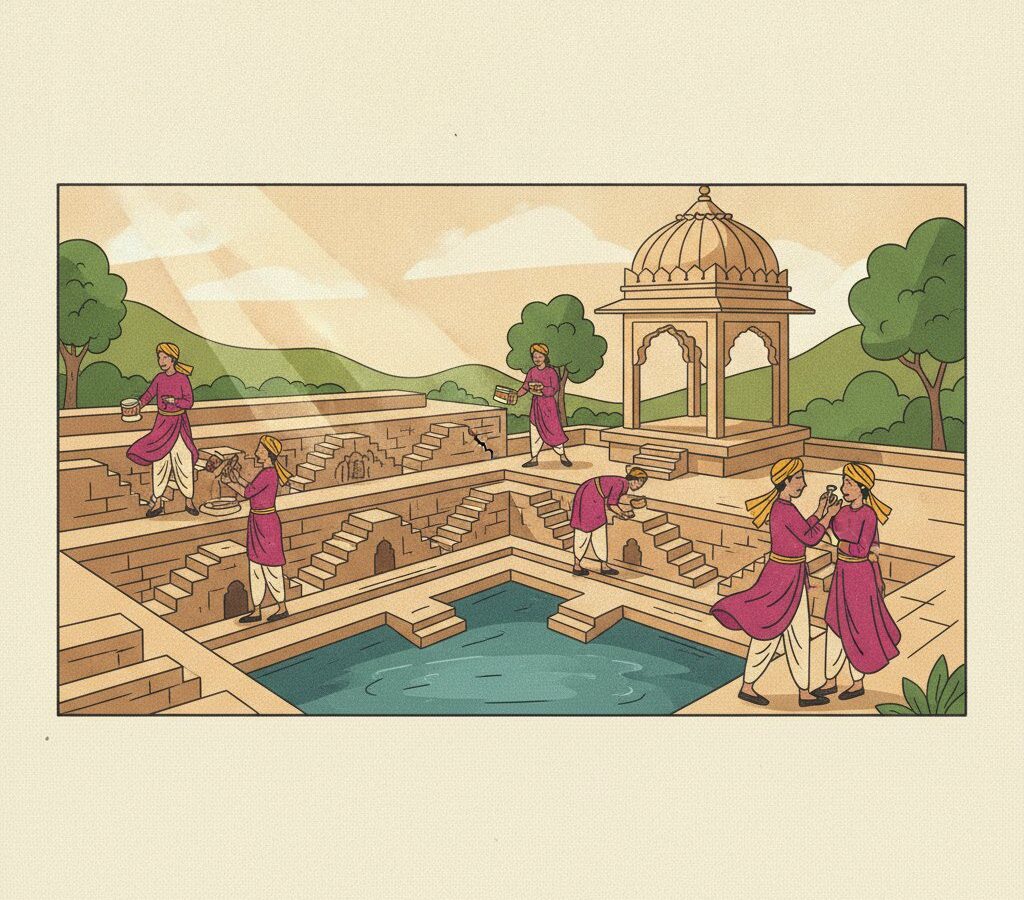
Stand at the edge of a stepwell in Gujarat — a vav — and look down. The geometry descends in corridors of carved sandstone, a spiral of galleries reaching toward water. These structures are simultaneously feats of hydraulic engineering, works of devotional art, and social infrastructure. Many fell into disuse, then disrepair, then something close to forgetting. The restoration of stepwells like Rani ki Vav in Patan — which earned UNESCO World Heritage status in 2014 — points to a broader, hopeful story: India is increasingly choosing to save what it has.
The Scale of What Remains
India holds one of the world’s most extraordinary concentrations of built heritage. The Archaeological Survey of India maintains thousands of centrally protected monuments — temples, mosques, churches, forts, palaces, and ancient urban sites. To these must be added monuments protected by state departments, untold thousands of unlisted local structures, and the living heritage of old city quarters: the walled cities of Jaipur (a World Heritage Site since 2019) and Ahmedabad (inscribed in 2017, India’s first city to receive the designation), and the ghats of Varanasi. India holds over forty sites on the World Heritage List, spanning natural sites like the Western Ghats and cultural sites from the Ajanta and Ellora caves to the architectural ensemble of Mumbai.
Community, Craft and the Restoration Ethic
What has shifted meaningfully in recent decades is the growing emphasis on community-led conservation. Earlier models were often top-down. Contemporary practice, influenced by international charters and hard-won local experience, is more attentive to authenticity — to using lime mortars where lime was used, and to consulting the communities whose lives are intertwined with these places. Heritage walks in cities like Delhi, Hyderabad, and Ahmedabad — many run by voluntary organisations — have built constituencies of citizens who see their city’s old quarters as worth fighting for. The Indian National Trust for Art and Cultural Heritage (INTACH) has been central to this shift, cataloguing unlisted heritage and training conservation professionals.
The Honest Tensions
Tourism pressure is the most visible: the Taj Mahal, Hampi, and Ajanta receive visitor numbers their fragile fabric was never designed to absorb, and the crowds that World Heritage status attracts can paradoxically accelerate the decay the inscription was meant to prevent. Development pressure is equally acute: heritage precincts are often densely populated, their residents holding legitimate claims to better infrastructure and economic opportunity. Conservation that freezes a neighbourhood in aspic, prioritising visitors over residents, is both ethically troubling and practically unsustainable. The best projects upgrade infrastructure invisibly, support traditional livelihoods, and give local communities a genuine stake. India’s heritage belongs to the family that has lived in the same haveli for four generations and to the craftsman whose skills evolved alongside the temple he decorates. When conservation starts from that understanding, it succeeds. The movement is growing, the challenges are real, and the inheritance, still largely intact, is extraordinary.