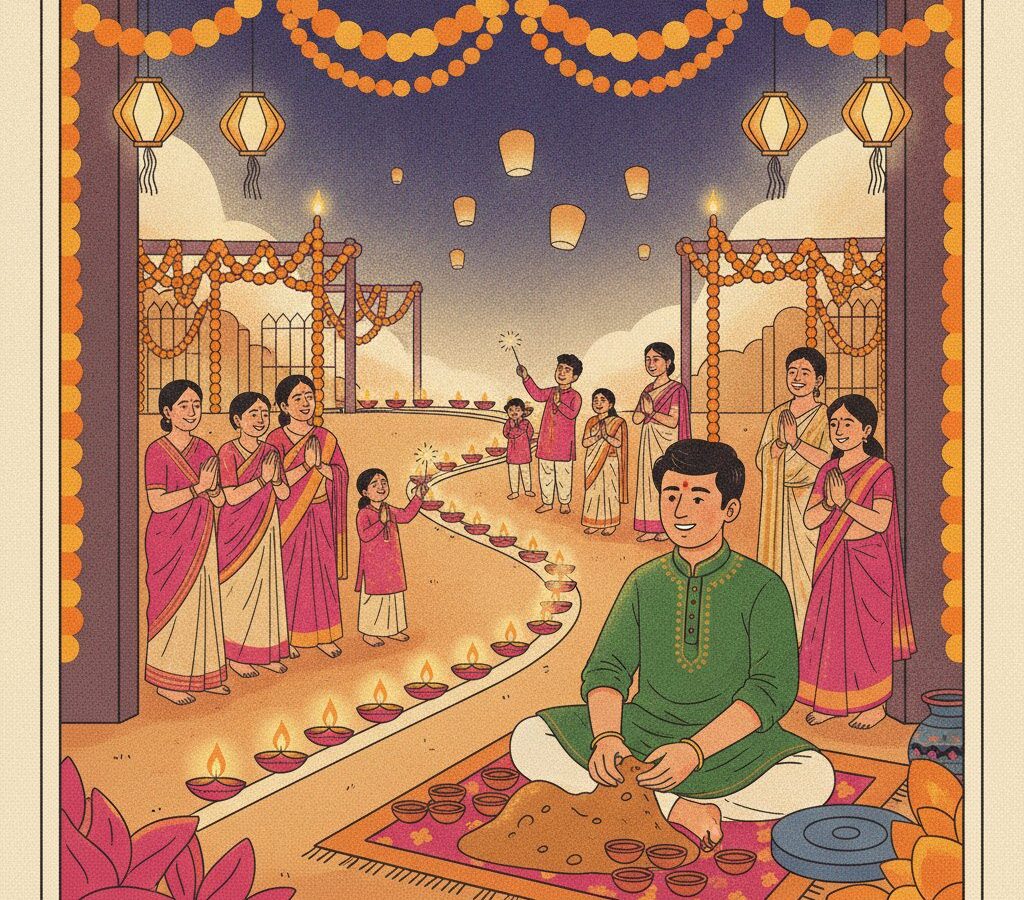
Every year, in the weeks before Diwali, the potter’s quarter of a town in Rajasthan or Uttar Pradesh hums with a particular urgency. Thousands of diyas — small clay oil lamps — are shaped, dried, painted, and stacked, bound for markets across the region. The potter’s trade is ancient. The demand is cyclical and reliable. And the lamp is only the most visible thread in a web of livelihoods that India’s festive calendar sustains with remarkable fidelity. This is one of the less-remarked gifts of festival culture: it is, and has always been, an economic system as much as a spiritual one.
The Artisan at the Heart of the Festival
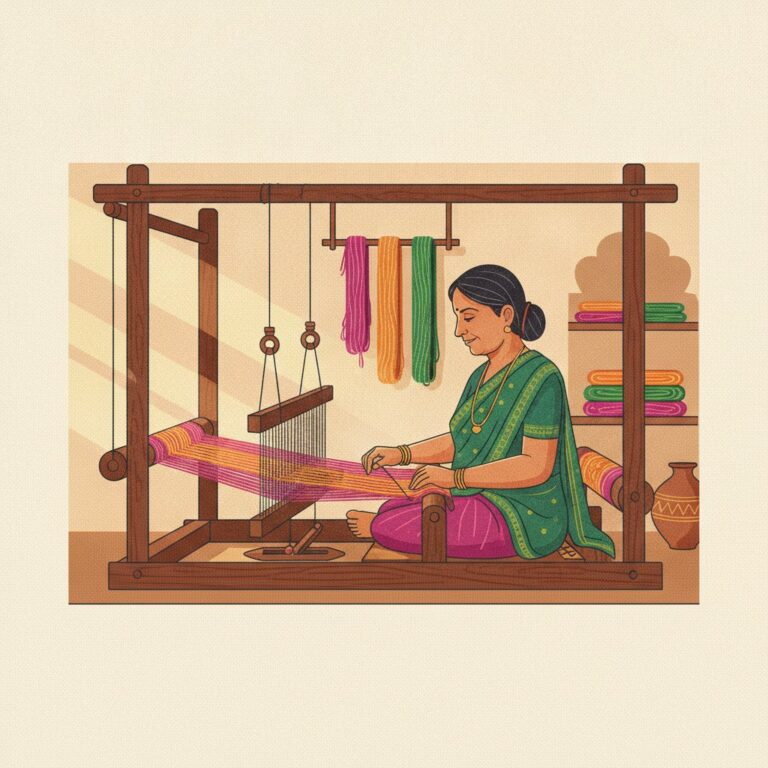
Consider the range of makers a single festival season supports. Diwali sustains potters, sweet-makers, textiles traders, and rangoli artists. Durga Puja in West Bengal is a massive commissioning exercise: idol-makers in Kumartuli in Kolkata begin work months in advance, while pandal designers, fabric workers, and food vendors all depend on the same fortnight. Ganesh Chaturthi in Maharashtra is a similar commissioning economy. The connection between festival and craft is not merely commercial — it is custodial. Many of the techniques are inherited within communities of practice and viable precisely because the festival creates a reliable annual demand. India’s regional textile traditions offer the most elaborate version of this relationship, connecting Banarasi and Kanjeevaram silk to specific communities of makers whose identity is inseparable from their craft.
Across Faith, Across Region
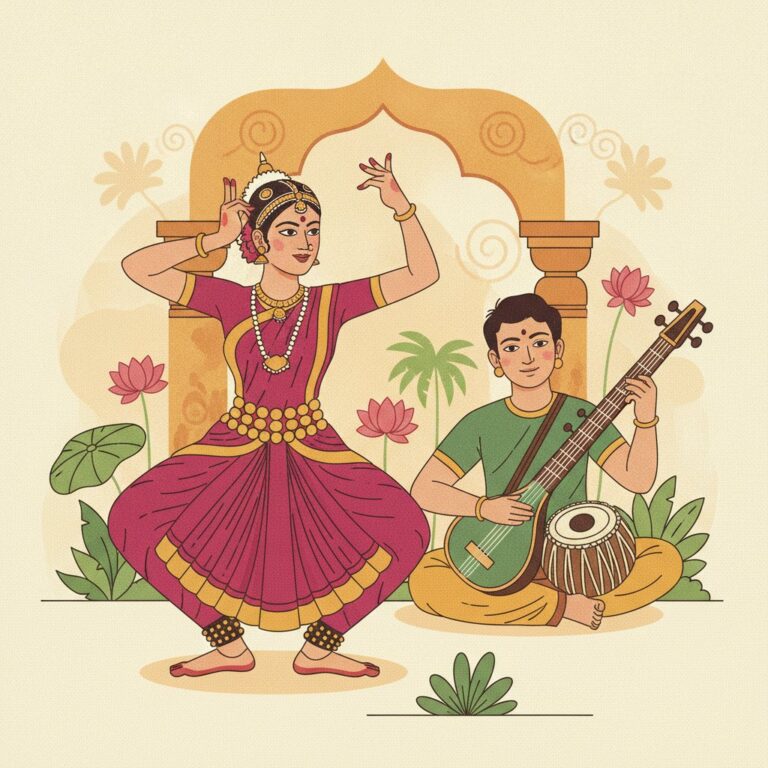
One of the most quietly remarkable features of the festive calendar is its cross-community participation. In many parts of the country, the craft economy of a Muslim festival sustains Hindu artisans, and vice versa. Eid sweets are made in shops run across communities; Diwali lamps are sold by traders of varied backgrounds; the flower markets that supply both temples and mosques belong to communities with no strict alignment to either. Regional festivals also bind communities to their landscape: Bihu in Assam marks the agricultural seasons and sustains the weaving of traditional gamosas; Pongal in Tamil Nadu is an agrarian thanksgiving; Pushkar Fair in Rajasthan is simultaneously a trading fair, a pilgrimage, and a showcase for regional embroidery and textile traditions.
Adapting to a Changing World
The festive calendar is not static. The most visible shift is the movement toward more sustainable celebration. The use of eco-friendly Ganesh idols made from clay rather than Plaster of Paris — which pollutes the water bodies into which they are immersed — has grown substantially, driven by civic activism, court orders, and grassroots enthusiasm. The result has been a quiet renaissance for traditional clay-idol makers whose craft had been threatened by the cheaper alternative.
- Campaigns to buy diyas from local potters rather than imported plastic alternatives have gained traction across Indian cities.
- Onam celebrations increasingly feature locally grown flowers for pookalams, reconnecting the festival to its agricultural roots.
- State governments and community organisations now run festive craft fairs that connect artisans directly to urban consumers.
India’s festivals have always been adaptive, absorbing new materials and social realities across centuries while retaining their essential character: a periodic interruption of ordinary time in which communities come together to celebrate, to give, to eat, and to make. The artisans who make the lamps and weave the textiles are not bystanders to this celebration. They are its authors. And as long as the calendar turns, their work endures.