Walk into the gram panchayat office of almost any village in India today and you will, by constitutional mandate, find a woman at or near the head of the table. Step onto the campus of an Indian Institute of Technology or the floor of a large IT services company, and you will find women in numbers that would have seemed optimistic a generation ago. Visit a self-help group meeting in a rural block and you will find women who have, often for the first time, signed a loan document and negotiated with a government functionary.
None of this means the job is done. India’s female labour force participation rate remains low by international standards, the gender pay gap is real, and the weight of unpaid domestic work still falls disproportionately on women. But the honest story is one of genuine, documented progress in specific domains — progress that, once understood, points toward what it takes to push further.
The Panchayat Experiment
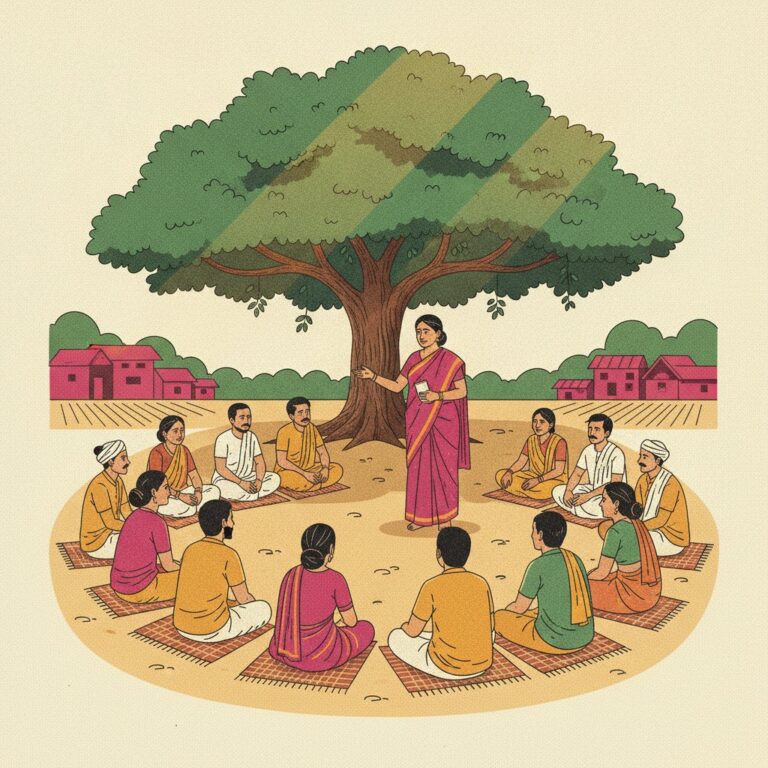
The constitutional amendment that reserved at least a third of seats in local self-government bodies for women — later raised to half in many states — is now old enough to have produced something researchers were not sure it would: women who govern. Early critics worried that elected women would serve as proxies for male relatives. The evidence, gathered over decades, tells a more encouraging story. In states where reservation has been in force longest, women who complete one term are far more likely to seek re-election or higher office, and daughters of women who served are measurably more likely to aspire to public roles. Villages with women-led panchayats show consistent differences in spending priorities — a greater share directed toward water, sanitation, and girls’ schooling.
The Tech and STEM Opening
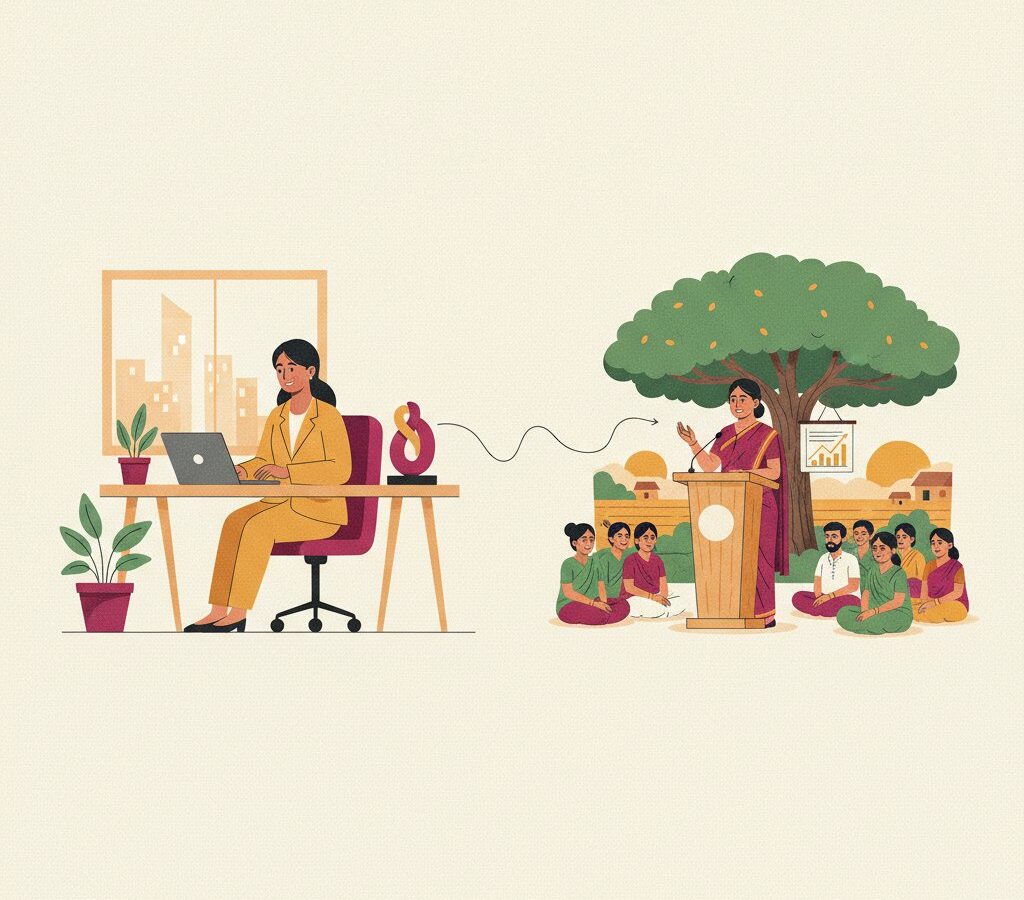
India’s IT services sector is, by the standards of male-dominated industries anywhere, unusually open to women. A combination of factors — the emphasis on credentials over social networks, the structured nature of white-collar tech work, and deliberate recruitment drives — has meant women make up a substantial share of the technology workforce. In higher education, women now form a majority in undergraduate enrolment overall, and their representation in science and engineering has grown consistently. The proportion of women graduating in computer-science disciplines is, by the assessments of labour economists, among the highest in the world for a major economy.
The gains are real. The ceiling is also real. Women remain underrepresented in senior technical roles and in startup founding teams. The combination of marriage timing, relocation expectations, and the absence of reliable childcare produces a characteristic career drop-off the industry has been slow to address.
The SHG Economy
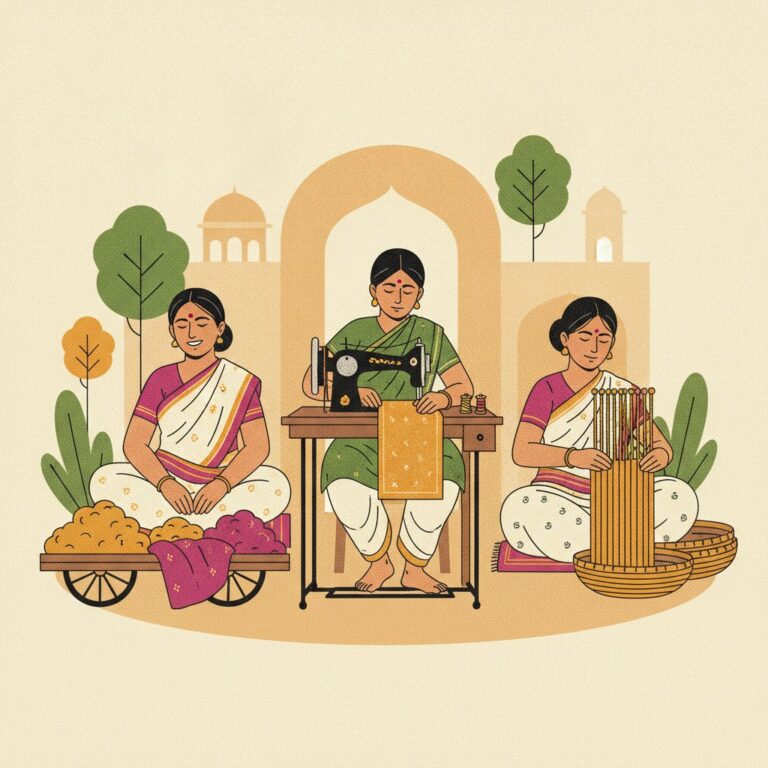
Perhaps the least visible revolution is also the broadest. India’s network of women’s self-help groups has become one of the largest community-organising structures anywhere. SHGs began as savings circles and have become platforms for collective bargaining, for accessing government schemes, and for building what researchers call economic agency — the experience of having made a financial decision and lived with its outcome.
What Still Holds Women Back
Honesty about the barriers is not pessimism; it is the only way the gains become durable. The structural constraints are well-documented: the burden of unpaid care work, physical-safety concerns that limit mobility, the marriage market’s implicit penalty on women seen as too independent, and the absence of affordable childcare. There is also the matter of social permission — the legitimacy a family and community grant to a woman’s work outside the home. That permission has expanded considerably in some regions and classes, barely at all in others. The panchayat data, the SHG evidence, and the IT-campus numbers all suggest the same thing: when structures create opportunity consistently, attitudes follow. Not fast enough. But they follow.