A Bet That Paid Off for Billions
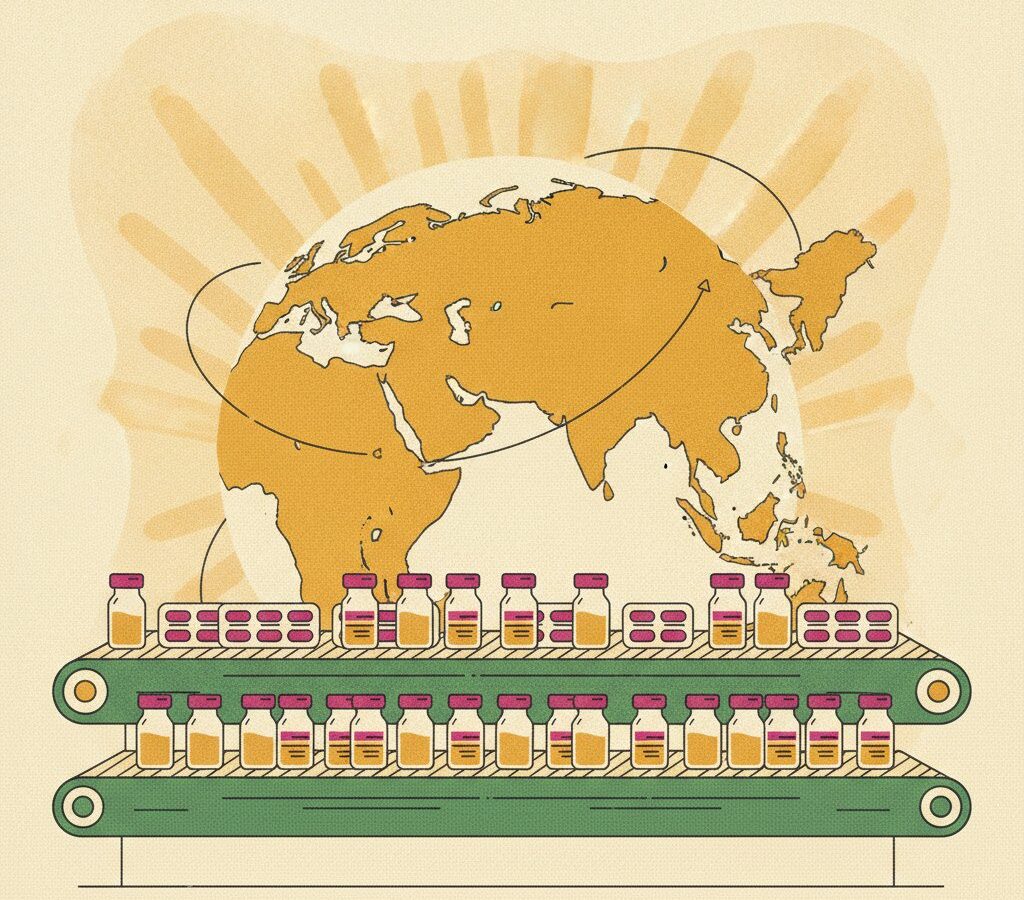
When you swallow an antibiotic in sub-Saharan Africa, pick up a blood-pressure tablet in Brazil, or receive an antiretroviral in a United Nations health programme, there is a good chance that medicine was made in India. The phrase pharmacy of the world is not marketing language — it is a widely accepted description of India’s role in global medicine supply. India is among the largest exporters of generic medicines by volume, supplying a significant share of the world’s vaccines and formulations to over 200 countries and territories. This did not happen by accident. It was the product of deliberate policy choices, a large technically educated workforce, and a legal framework that for much of the twentieth century prioritised access to medicines over monopoly pricing.
How the Foundations Were Built
Independent India inherited very little domestic pharmaceutical manufacturing. A turning point came in the early 1970s when India revised its patent law to allow only process patents — not product patents — for pharmaceutical compounds. Indian companies could legally make the same molecule as a foreign brand using a different process. The intent was clear: make essential medicines affordable to a population that could not pay Western prices. Over the following decades, companies such as Cipla, Dr. Reddy’s, Sun Pharma, Serum Institute, and Bharat Biotech built genuine technical expertise, and cities like Hyderabad, Ahmedabad, and Pune became pharmaceutical hubs. The global moment that brought India’s role into sharp focus came during the HIV/AIDS crisis, when Indian generic manufacturers offered antiretroviral combinations at a fraction of the originator price, making treatment programmes in low-income countries financially viable for the first time. India’s vaccine story runs parallel: the Serum Institute of India is by many measures the world’s largest vaccine manufacturer by volume.
The Honest Challenges
No honest account leaves out the difficulties. The sector has faced serious, well-documented quality-regulation challenges. International regulators — the US FDA, the European Medicines Agency, the WHO — have at various times issued warning letters and import alerts against Indian facilities, including some belonging to large, reputable companies, ranging from data-integrity issues to lapses in sterile manufacturing. India’s own drug regulatory framework has historically been seen as under-resourced relative to the industry it oversees. Many Indian plants meet the highest international standards, but inconsistency remains a genuine concern, and it matters because the patients depending on these medicines are often among the most vulnerable in the world. A second challenge is raw-material dependence: a large share of the active pharmaceutical ingredients used by Indian manufacturers is imported, predominantly from China — a dependence that became starkly visible during supply disruptions in 2020.
A Legacy Still Being Written
None of these challenges erase what the industry has achieved. Affordable generics and vaccines from Indian manufacturers have meaningfully extended and saved lives across the Global South — a substantial, positive contribution to human welfare, deserving to be understood clearly, with its complications intact. The next chapter involves biosimilars, investment in original drug discovery, and the effort to harden supply chains. India’s role in global health is not static. It is a work in progress — and an ambitious one.