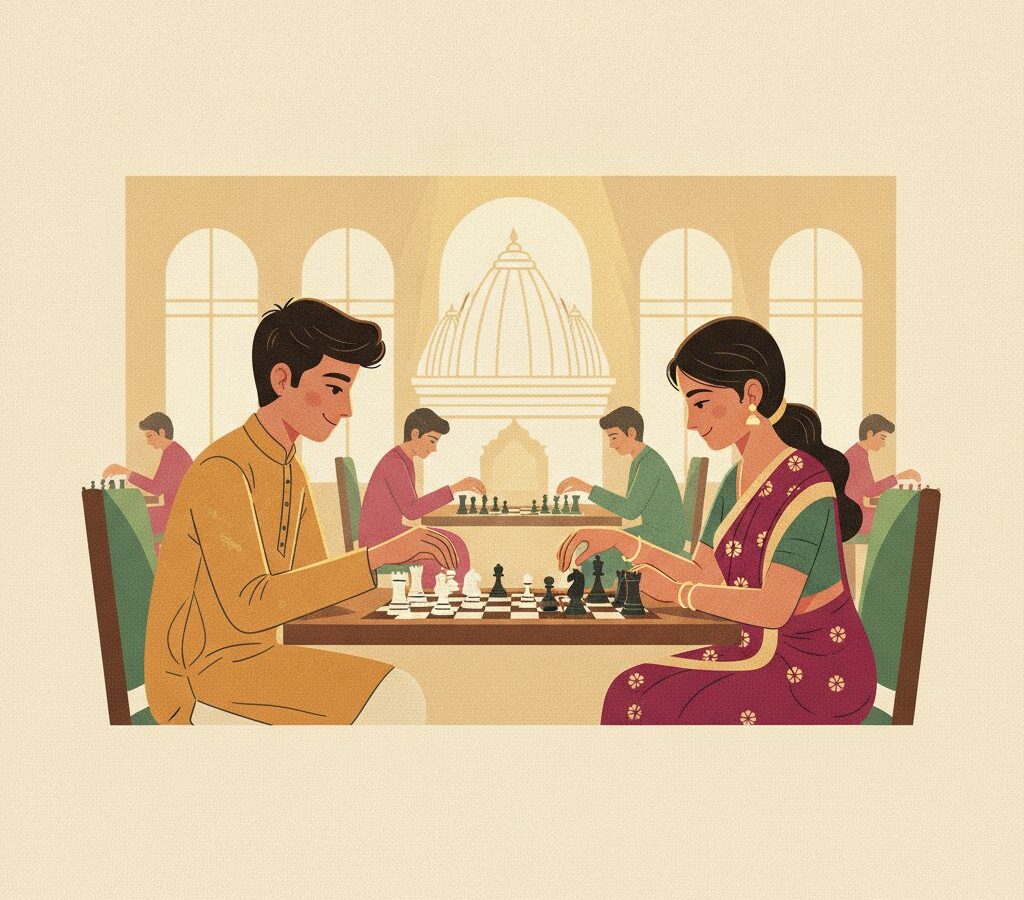
For most of the twentieth century, chess was a game that happened elsewhere. The Soviet Union dominated international competition so thoroughly that the rest of the world competed, in effect, for second place. India was not even reliably in that conversation. Then, in 1988, a young man from Chennai named Viswanathan Anand became India’s first grandmaster — and the country’s relationship with the game changed permanently.
The Pioneer Who Proved It Was Possible
Anand’s achievement was not merely a personal milestone. It was a proof of concept for an entire generation. He went on to become world champion — the first Asian player to hold the undisputed title — and defended it multiple times across different formats and eras. What Anand showed was that a player from a country with no Soviet-style chess infrastructure, no professional coaching system, and no culture of treating chess as a serious career could still compete at the highest level in the world. That demonstration mattered enormously. In a country where parents weigh career stability very carefully, having a world champion with his face on national television made chess legible as a genuine pursuit.
Anand also remained generous with his time and his visibility. He has spoken at length about wanting to see Indian chess grow. While he did not single-handedly create what followed, the symbolism of his example was inseparable from the movement that came after.
The Grandmaster Boom
India today has more than eighty grandmasters, a number that has grown sharply over the past decade and continues to climb. Several of them earned the title while still in their early to mid-teens — a feat that, even globally, places them in rare company. Players like R. Praggnanandhaa, D. Gukesh, Nihal Sarin, and Arjun Erigaisi — all of them born in the 2000s — have reached the world’s top rankings and competed with, and beaten, the world’s best. Gukesh became the youngest undisputed world chess champion in history in 2024, a title that would have been almost unimaginable for an Indian player even fifteen years ago.
It is worth being honest about what this boom looks like at ground level. The concentration of talent is still heavily weighted toward a handful of cities and states — Tamil Nadu in particular has produced a disproportionate share of grandmasters, a fact that reflects local culture, access to coaching, and institutional support more than any uniform national trend. Chess in India is not yet the kind of mass participatory sport that cricket is.
What Is Driving It
Several forces have converged. The spread of online chess platforms means a child in a small town can now play against and learn from strong competition without ever leaving home. Platforms like Chess.com and Lichess have made serious training accessible in ways that a physical club or a well-stocked chess library simply could not. The pandemic period, which saw a global surge in online chess, accelerated this in India as it did everywhere. Coaching ecosystems have also improved: the success of early grandmasters created a pipeline, as retired players became coaches and academies formed around strong local players.
What Comes Next
India’s ambitions in chess are now openly institutional. The country has hosted major international tournaments, and the 2024 Chess Olympiad saw India win gold in both the open and women’s team events — the first time any country had achieved that double. It was the kind of result that rewrites a sport’s geography. The honest caveat is that sustained dominance requires more than talent: a deep bench, consistent funding, and a culture that continues to value the game even when the current generation of stars steps back. India has the first. It is still building the rest. But the trajectory is clear, and it is pointing upward.