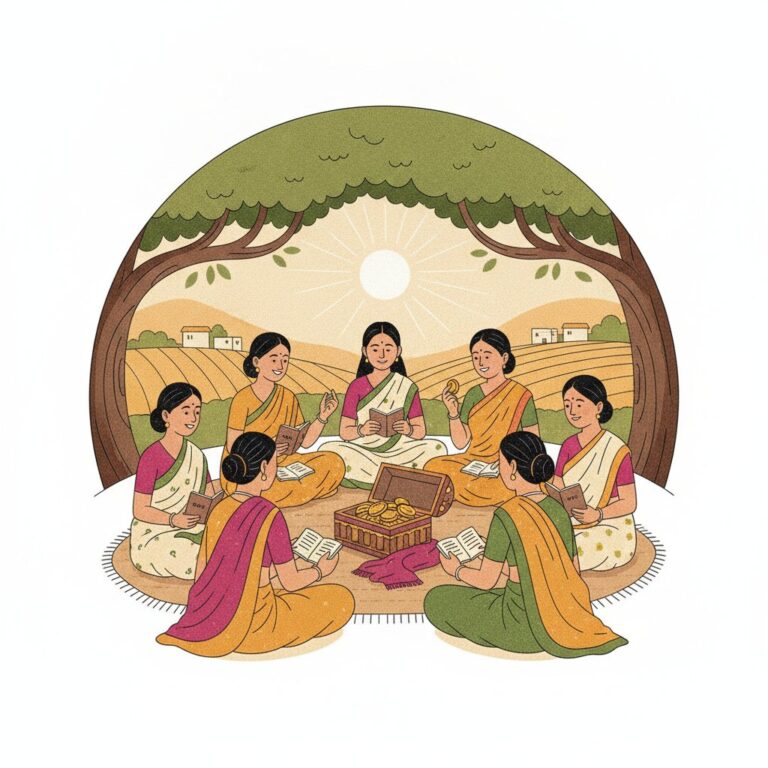
In the late 1940s, the farmers of Anand district in Gujarat were selling their milk to a private contractor who set the price, controlled the chilling, and pocketed the margin. When they organised to break that hold, they did something that would quietly reshape rural India over the next half-century. They formed a cooperative, named it after their region, and called it Amul.
The Idea Behind the Brand
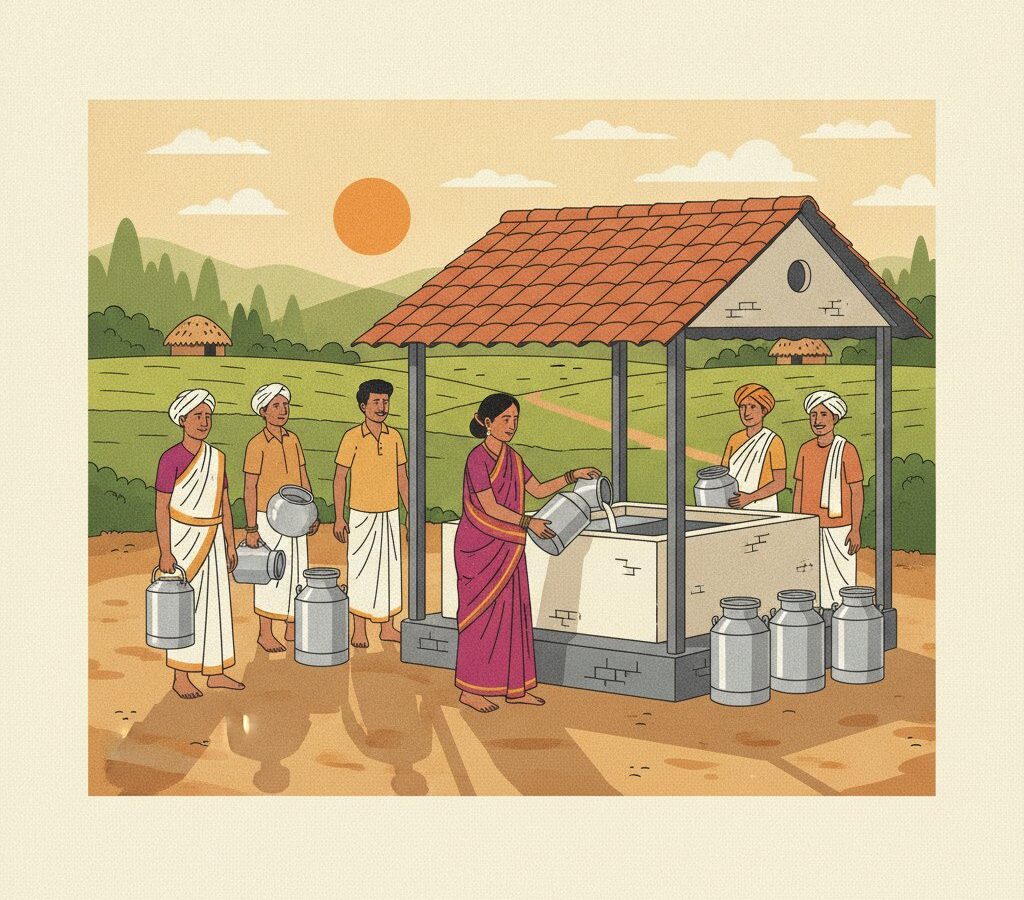
The Amul model is deceptively simple. A farmer pours her milk into the village collection centre — usually a modest shed with a weighing scale and a fat-content tester. She is paid within days, at a rate linked to the milk’s quality. That village society is, in turn, owned by its members. The village societies feed into a district union that handles chilling, processing, and logistics. The unions together own the state federation that markets the final product. The farmer at the bottom of the chain is also, structurally, the owner at the top of it.
Verghese Kurien, the engineer who became the lifelong architect of the model, described the principle plainly: the surplus must go to the producer, not to the trader who stands between producer and consumer. That logic became the backbone of what the government scaled up nationally as Operation Flood, launched in 1970.
What Operation Flood Actually Did
Operation Flood used European milk powder and butter oil — donated as food aid — not to flood Indian markets but to fund infrastructure. The aid was sold in Indian cities, and the proceeds financed rural chilling plants, milk tankers, veterinary services, and the expansion of cooperative networks across states. Over roughly three phases spanning more than two decades, the programme linked hundreds of thousands of village cooperatives and connected rural producers to urban consumers through a refrigerated chain that had barely existed before. India, which had long struggled with milk shortages, became the world’s largest milk producer — a title it has held for many years. For rural women in particular, who traditionally do dairying work, the cooperative changed the economic texture of daily life by paying into a household account.
Why It Remains a Reference Model
Economists return to Operation Flood repeatedly because it achieved something most rural development programmes do not: it created a self-sustaining institution rather than a dependency. Amul does not require a government subsidy to function today. It competes in the open market and channels a significant share of revenues back to farmers through the cooperative structure. The model also demonstrated that smallholders — farmers with one or two animals — could collectively achieve the quality and volume that modern markets require.
Replication, however, is genuinely hard. The Anand model succeeded partly because it emerged from a specific moment of political will, strong local leadership, and decades of patient institution-building. Even within India, states that imposed cooperative structures without the underlying social trust produced pale imitations. A cooperative is a social organisation before it is an economic one, and that cannot be legislated into existence overnight.
The Honest Ledger
Amul and Operation Flood deserve their reputation. They solved a real problem at national scale using a market mechanism rather than permanent subsidy. What they do not offer is a frictionless template. Milk cooperatives in some states have been captured by political interests and lost their producer-first character. The promise of the model depends entirely on governance — on whether the people running the union answer to the farmers or to someone else. Where that accountability holds, the model works. That caveat does not diminish what was built. It clarifies what any honest successor must protect.