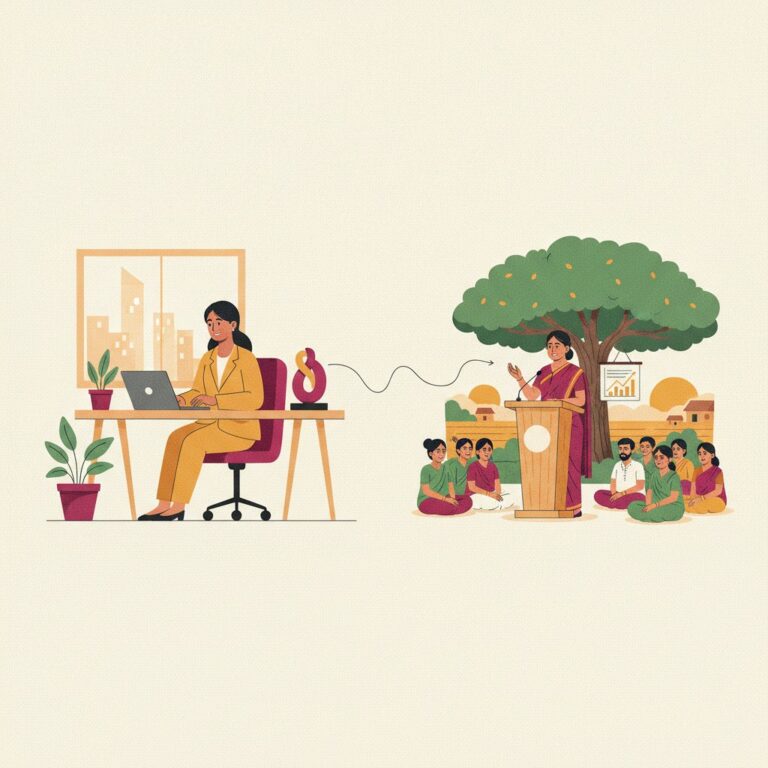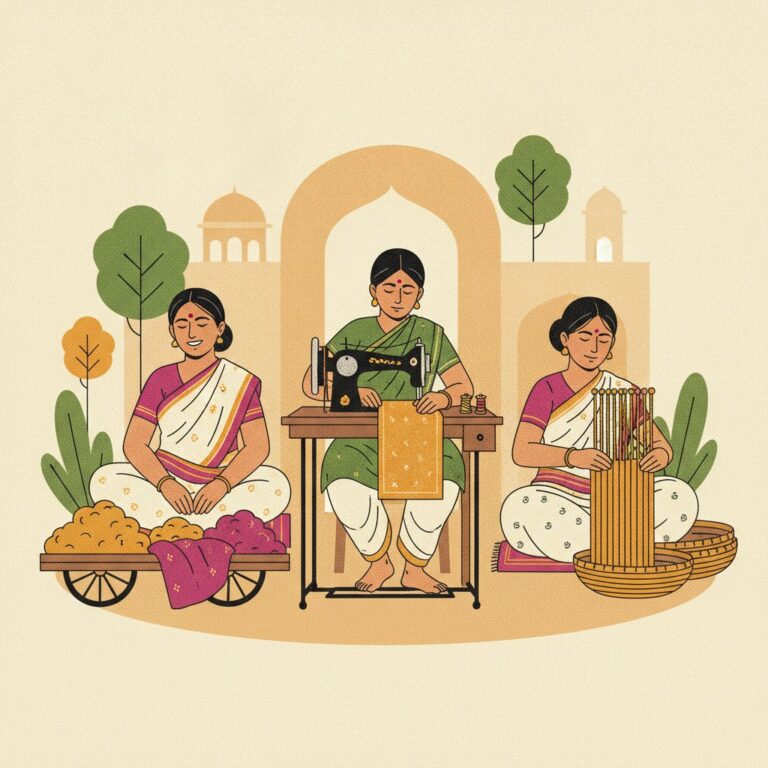
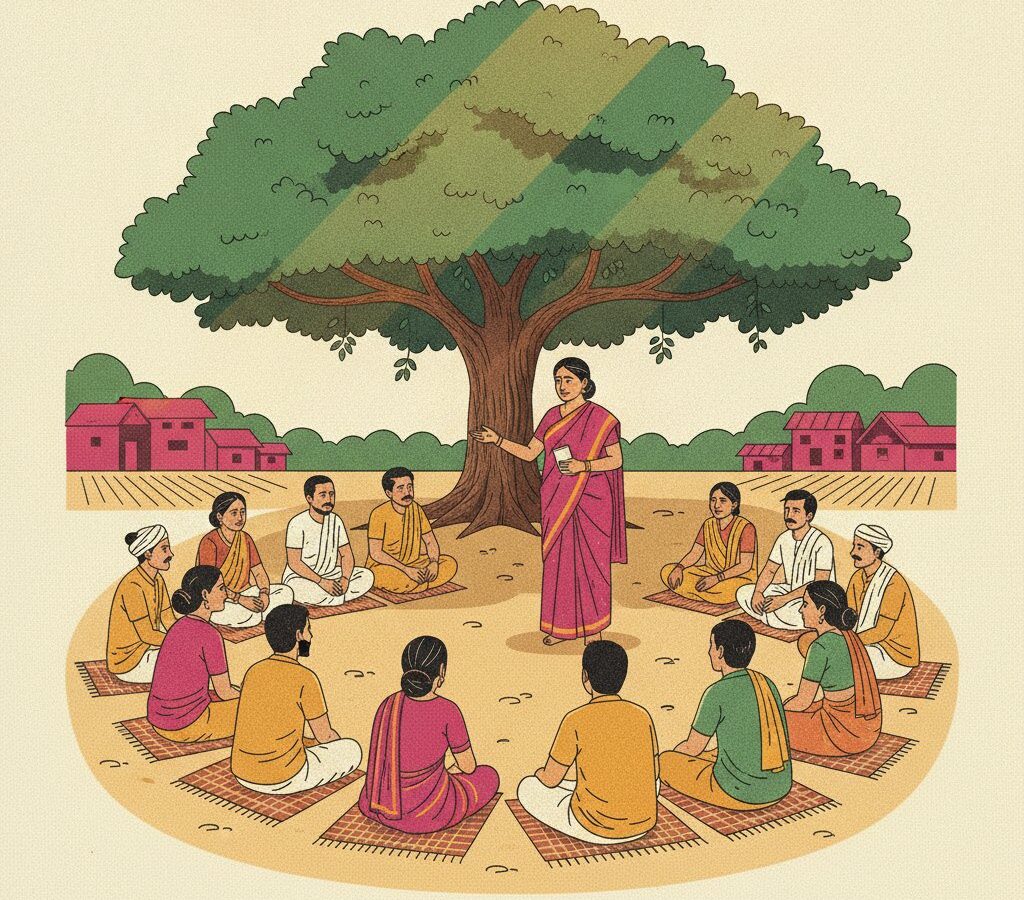
In 1992 and 1993, two constitutional amendments — the 73rd and 74th — did something quietly radical. They reserved at least one-third of all seats in panchayati raj institutions for women, across every tier of rural local government in India. For the first time, the village governing body was constitutionally required to include women as a substantial bloc. Several states went further and raised the reservation to fifty per cent. The result, over the following decades, was one of the largest expansions of women’s formal political participation anywhere in the world.
What the Numbers Built
Before the amendments, women in village governance were almost invisible. After them, millions of women entered gram sabhas, gram panchayats, and block and district councils as elected members and as chairpersons. The scale is difficult to overstate, drawn from every social background, including significant numbers from Scheduled Castes, Scheduled Tribes, and Other Backward Classes, for whom overlapping reservations applied simultaneously. The early years were messy. Many women arrived with limited administrative experience and active resistance from male relatives and dominant-caste leaders. Yet they arrived.
What Changed on the Ground
Researchers who studied panchayat governance documented something consistent and striking: the priorities of local bodies shifted when women led them. Village councils headed by women were more likely to direct funds toward drinking water, sanitation, primary education, and healthcare access — the concerns women in those villages most frequently named as urgent. This pattern held across different states and studies, pointing to something real: representation was, at least in part, reshaping what government did.
The Proxy Critique and the Evidence That Complicated It
From early on, critics raised the proxy problem: that many elected women were, in practice, stand-ins for husbands or male relatives. The phenomenon was real enough that it acquired a name — sarpanch pati, or panchayat husband. The critique was valid. But the evidence that accumulated complicated the simple version. Studies comparing first-term and subsequent-term women representatives found meaningful differences. Women who had served one term tended to be more assertive, more informed about their formal powers, and more likely to act independently in a second term. The reservation created a learning curve, and women were climbing it. In places where reservation had rotated through the same panchayat multiple times, residents — including men — grew more accustomed to women exercising authority.
What Remains Unfinished
Three decades in, the picture is one of genuine but uneven progress. Women hold seats; far fewer hold real authority in the sense of controlling budgets and commanding bureaucratic cooperation. The gap between formal power and substantive power remains wide in many states, shaped by caste hierarchies and economic dependence. Women from marginalised communities face additional layers of exclusion even after winning election. What the 73rd and 74th amendments did was open a door that was previously locked. Walking through it, and building what lies beyond, is work that village India is still doing — season by season.