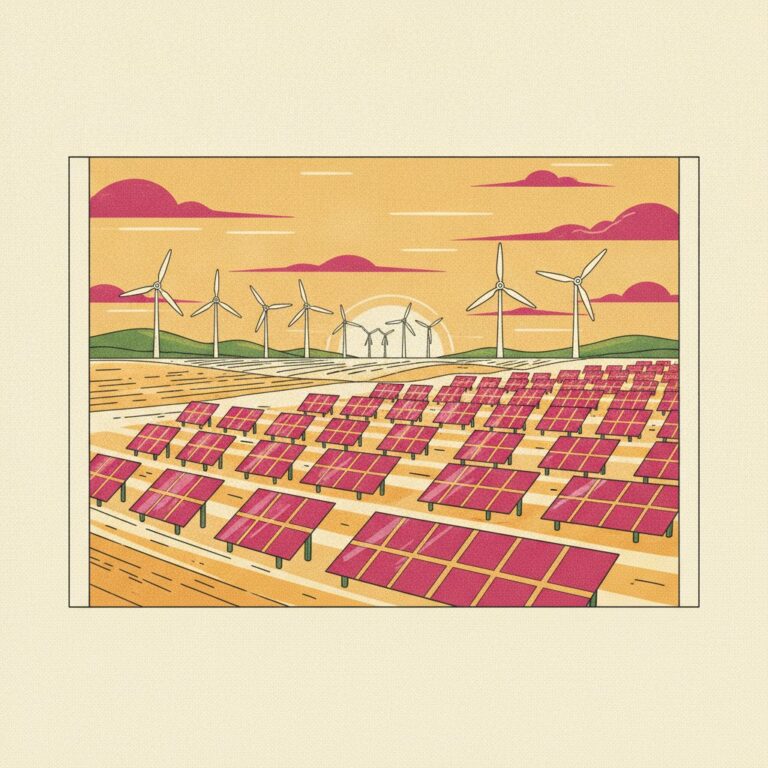
There is a particular kind of darkness that people in well-electrified cities rarely think about: not a power cut that lasts a few hours, but a baseline assumption that reliable electricity simply does not arrive. For a significant portion of India’s rural and remote population, that has been the lived reality — grid lines present on maps, voltage arriving too low or too briefly to be useful. Decentralised solar has not solved all of this, but it has changed it in ways difficult to overstate.
Three Technologies, One Shift
- Solar home systems and lanterns — small panels charging batteries that power LED lights, phone charging, and small fans, bringing basic lighting to households the grid had not reached reliably.
- Solar microgrids — village-level systems where a shared installation distributes power to clusters of homes, often with a local operator for maintenance and billing, supporting not just lighting but productive uses like refrigeration and electric machines.
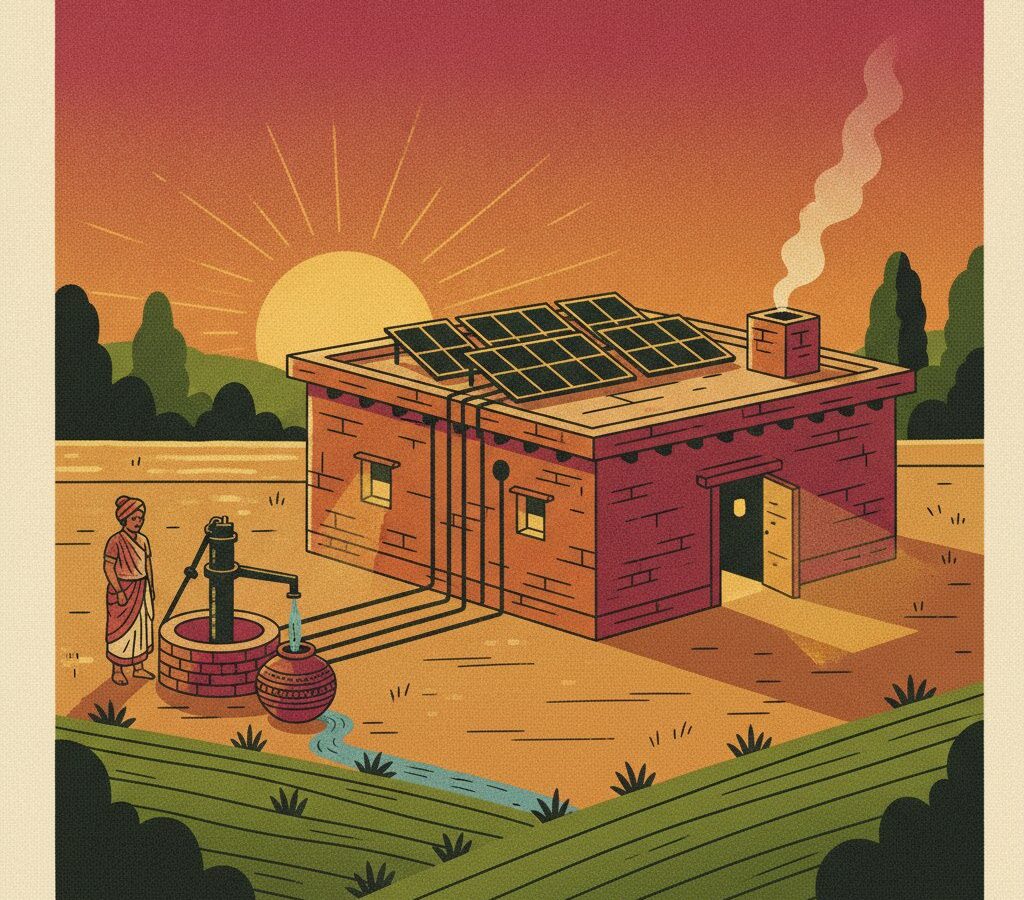
- Solar-powered irrigation pumps — arguably the most economically transformative. A solar pump lets a farmer irrigate at a predictable time, without paying for diesel and without waiting for erratic grid supply. For smallholders growing water-sensitive crops, the shift in control over irrigation timing can meaningfully affect yields and income.
What Changes for a Household
When reliable electricity arrives in a home that did not have it — even from a small rooftop panel and a battery — the changes are practical and compounding. Kerosene expenditure drops. A child’s study hours extend past sunset. A phone charges reliably, which in rural India increasingly means access to banking, markets, and government services. For women in particular, the reduction in time managing kerosene and the expansion of safe lit hours after dark carry documented benefits across multiple states. India’s solar pump programmes have drawn particular attention from agricultural economists: farmers report greater control over irrigation scheduling and reduced input costs, with the government’s scheme to solarise agricultural feeders extending the model further.
The Honest Challenges
- Maintenance and repair. A system that breaks down is worthless if no one nearby can fix it or source parts. Many early installations fell dark within a few years. The programmes that fared better invested as seriously in after-sales service as in installation.
- Financing access. Upfront costs remain significant relative to the incomes of those most likely to benefit. Subsidy delivery has not always been timely; pay-as-you-go models show promise but have not scaled uniformly.
- Grid competition. As the national grid has improved in many areas, the most sustainable decentralised models position themselves as complements to the grid rather than substitutes.
- Quality variation. Rapid market growth brought substandard panels and batteries that degrade quickly, damaging trust in some markets.
Energy as Foundation
What decentralised solar has demonstrated — across hundreds of villages and thousands of individual farm decisions — is that energy access need not wait for grid infrastructure to arrive. It can be built from the sun downward, piece by piece. The challenges of maintenance, financing, and quality are real and unresolved in many places. But the fundamental case — that the sun is reliable, that panels are cheaper than ever, and that people given affordable energy will use it productively — has been made convincingly enough that there is no going back to treating electrification as a single-track problem.