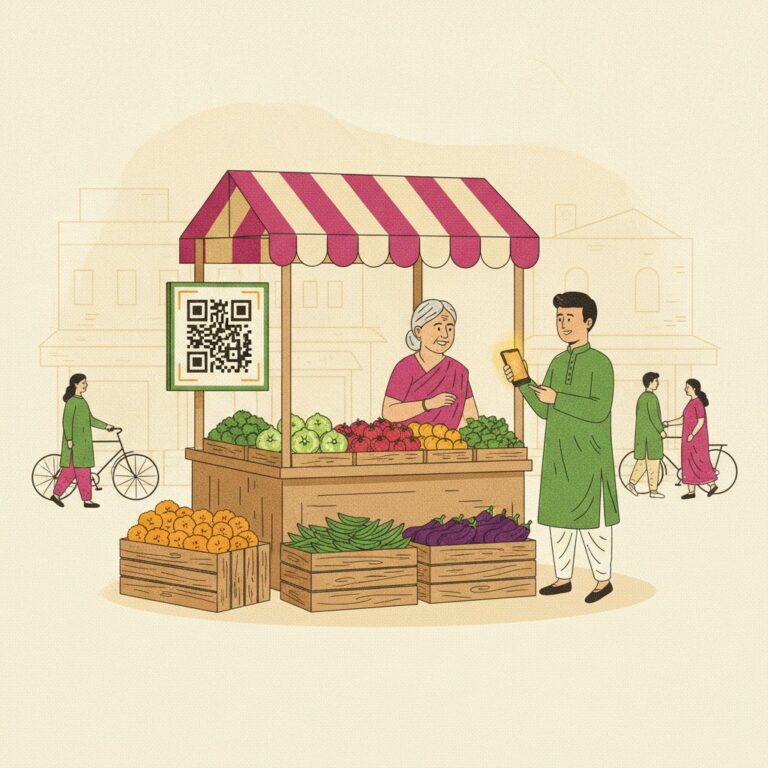
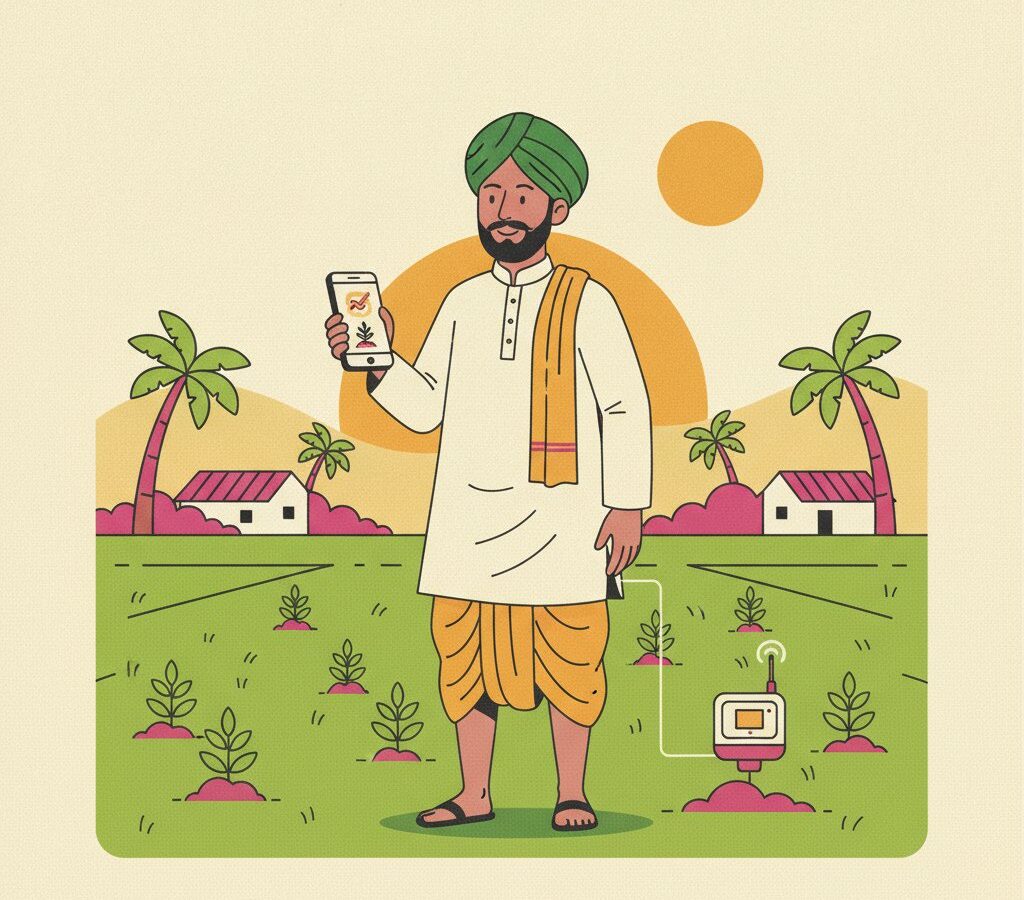
India’s agricultural economy is one of the most complex in the world, not because of its scale alone, but because of its structure. The majority of the country’s farming households work on very small landholdings — often under two hectares. These smallholder farmers are the backbone of the food system, and historically, they have been the last to benefit from agricultural technology, pricing information, or institutional credit. Over the past several years, a generation of founders — many from agricultural families themselves — has been building products specifically for this segment.
The Problems Being Addressed
The challenges are well-documented and interrelated. Access to timely market price information has historically been poor, leading farmers to sell at distress prices immediately after harvest. Input costs are often paid at inflated rates through local intermediaries. Credit access remains constrained because farm income is informal and difficult to verify. Agronomic advice has traditionally come through an underfunded government extension system, or through the same input dealers who profit from selling more product. And weather is the most immediate uncertainty: a smallholder has no buffer against a failed crop.
Where Technology Has Genuinely Helped
- Market linkage platforms that connect farmers directly with buyers have, in documented cases, improved prices by reducing intermediary steps and improving bargaining power.
- Hyperlocal weather and pest advisory services — often delivered over WhatsApp or voice calls rather than a dedicated app — have helped farmers make better timing decisions. The delivery channel matters enormously; advice on a platform farmers already use has much higher adoption.
- Soil testing and input recommendation has helped some farmers cut costs by identifying over-application of fertiliser.
- Custom hiring centres for mechanisation let farmers rent equipment by the hour, addressing the problem that small landholdings cannot justify owning machinery.
The Adoption Barriers Honest Accounts Must Acknowledge
Digital literacy is not uniformly distributed. Women farmers, who constitute a significant portion of the workforce but have historically had less access to mobile phones, are frequently excluded by design rather than intention. Trust is earned slowly: farmers who have seen programmes come and go are rationally conservative, and a platform that works in year one but pivots in year two causes real harm. Connectivity remains patchy where farming is most concentrated; designing for low-bandwidth and feature phones is harder and less glamorous, but it is the only path to reaching the farmers who most need better tools.
The Reason for Qualified Optimism
The agritech space is maturing. Earlier waves of investment went toward platforms that replicated existing intermediary structures with an app layer on top. More recent work, informed by field experience and rigorous impact measurement, is increasingly oriented toward outcomes farmers actually measure: the price received, the input cost, the yield, the repayment cycle. The founders who have stayed through a difficult funding period tend to be those who spent time in the field and understand that agriculture runs on relationships, seasonality, and risk. The smallholder farmer does not need to be romanticised or rescued. She needs tools that work, that she can trust, and that leave her with more at the end of the season than she started with.